
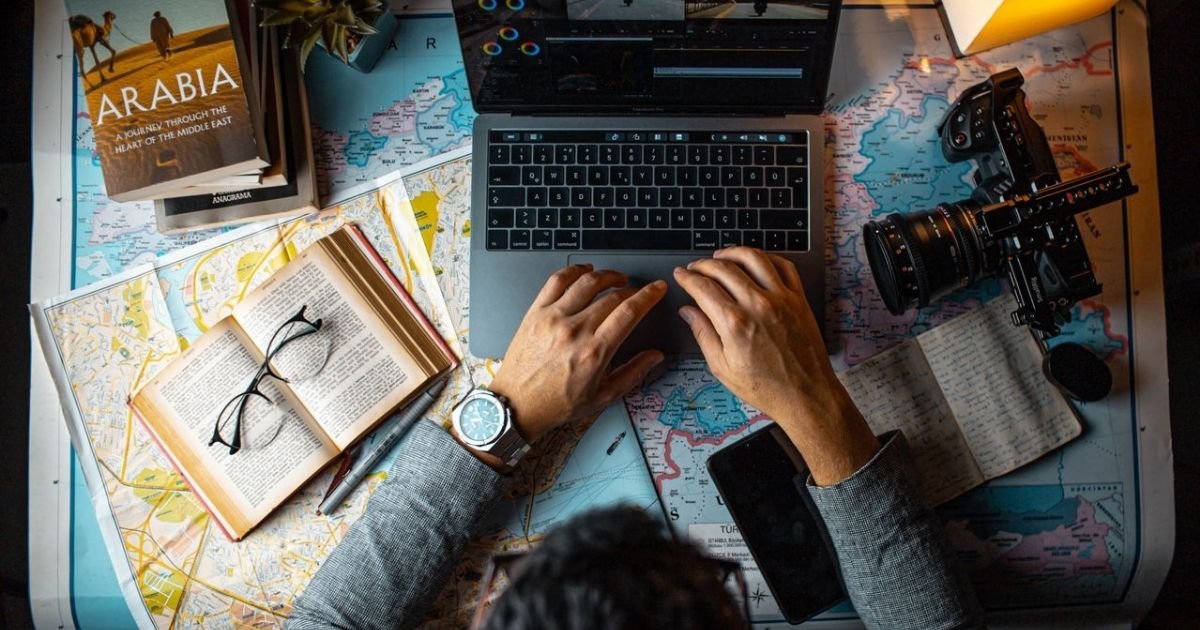
Is burnout really just a vacation away from being solved? I have always figured that taking a week off from work to travel meant coming back lighter, steadier, and ready to work again. In my experience, this true, but only temporarily. Lying on a beach or wandering a new city can feel restorative while it’s happening. Then the trip ends and I’m pulled straight back into deadlines and the pressure to act like I never left. Within a week or two, I would feel the same way I did before taking a vacation. The feeling of burnout would return and I would simply go with the motions rather than perform my best.
Research shows that travel can lift our mood and that time away from work is tied to better mental health, but turning that lift into something that lasts is far harder than booking a flight (Kawakubo & Oguchi, 2022; Kim, 2019). That doesn’t mean the time off is wasted. It means the benefit depends almost entirely on what kind of break it actually is, and on what we do with it once we’re there.
A 2022 study followed more than 500 people in Japan before, during, and after a winter vacation. People who traveled reported higher wellbeing than those who stayed home, which is the easy part to celebrate. However, their wellbeing peaked before and during the trip. Then it dipped right after, and sat at its lowest a full month later. What mattered most wasn’t necessarily the destination or the budget. It came down to whether people did something genuinely new and challenging, which is an experience the researchers called mastery (Kawakubo & Oguchi, 2022).
There’s also another version of travel that has nothing to do with vacations. During the pandemic, many of us stopped moving around almost entirely. We worked from the kitchen table, skipped the commute, and left the house far less than we used to. A 2023 study across six large U.S. cities found that more telecommuting, fewer trips, and less use of transit and ride-hailing, were all linked to higher levels of anxiety and depression. The researchers suspected the missing ingredient was outdoor activity, along with the social contact and sense of movement that tend to come with it (Yang et al., 2023).
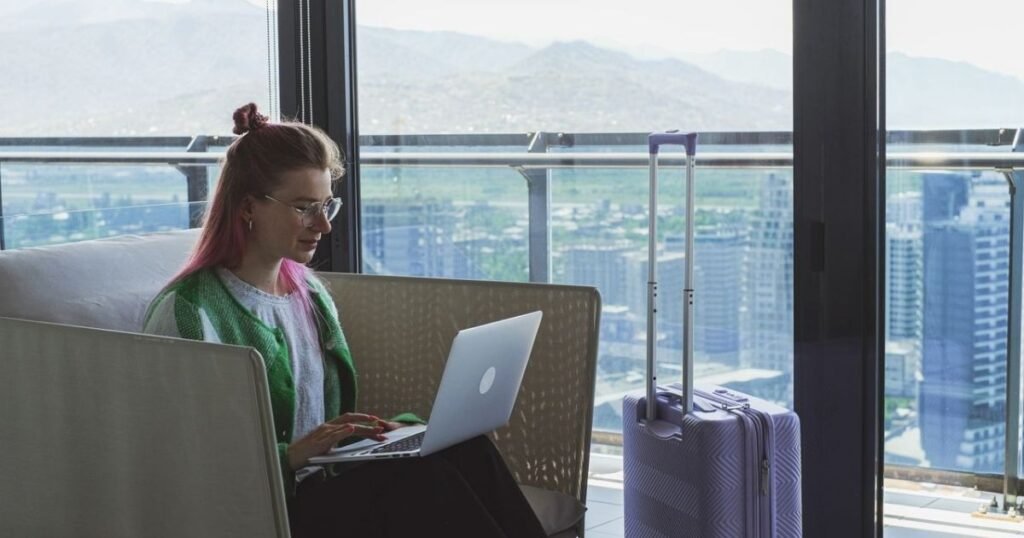
Work and travel can come in different tiers, including:
- Digital nomadism: Digital nomads are location-independent remote workers (e.g., freelancers, employees, and self-employed individuals) who use the internet to stay connected to their work while traveling domestically or abroad (Elliott, 2025).
- Working holiday: A working holiday is an extended trip abroad during which travelers fund their journey by taking on short-term, seasonal jobs (e.g., waitstaff, farm work, or hospitality) while immersing themselves in local culture and making international connections (Bridge, 2016).
- Workcation: A workcation is a short-term arrangement in which remote workers perform their regular jobs from a leisure destination (Lufkin, 2022).
- Bliesure: This form of business travel is the practice of extending a work trip by a few personal days to explore a destination before heading home and turning a company-funded journey into a partial vacation (Wong, 2024).
However, anyone considering any of these work-travel models should understand the requirements to avoid legal, financial, and professional complications. For digital nomads, overlooking visa conditions (e.g., proof of remote income, health insurance, and background checks) can result in denied entry or tax liability abroad (Elliott, 2025). Similarly, working holiday participants must meet strict eligibility criteria, including age limits and, in some cases, enrollment in a recognized sponsoring organization, without which participation may not be legally permitted (Bridge, 2016).
So what actually helps? It’s doing something active, novel, or social, and being able to step away from work without losing pay or standing in the process. A challenging hike does more than a luxury suite. A real break does more than a long weekend spent half-answering emails. A policy that protects time off does more than a motivational poster about balance.
Until we treat rest as something to design well and actually guarantee, instead of something we squeeze in once a year, a vacation will keep feeling like a temporary exhale. A necessary one, even. Just not the cure we keep hoping it will be.
~ Dillon Price

Dillon Price is a native of Western Massachusetts. He has worked as a content writer for over eight years and is the owner and founder of EnRoute Jobs, a niche job board designed for digital nomads, travelers, and expats.
References
- Kawakubo, A., & Oguchi, T. (2022). What promotes the happiness of vacationers? A focus on vacation experiences for Japanese people during winter vacation. Frontiers in Sports and Active Living, 4, 872084.
- Kim, D. (2019). Does paid vacation leave protect against depression among working Americans? A national longitudinal fixed effects analysis. Scandinavian Journal of Work, Environment & Health, 45(1), 22–32.
- Yang, X., Chen, P., & Zhang, Y. (2023). How mentally healthy we are during the pandemic? Findings from changed travel behavior. Journal of Transport & Health, 29, 101587.
- Elliott, J. (2025, December 10). What is a digital nomad? What to know about a work and travel lifestyle. CO— by U.S. Chamber of Commerce.
- Bridge, J. (2016, April 17). What is a working holiday? InterExchange.
- Lufkin, B. (2022, March 9). Workcations: The travel trend mixing work and play. BBC Worklife.
- Wong, Brittany. (2024, November 20). It pays to ‘bleisure’ travel: Here’s what to know about the latest travel trend. HuffPost.